French Terry or Brushed Fleece: Which Fabric Fits Your Custom Hoodie?
A hoodie can look right in a design drawing and feel wrong once it is made. The body may hang differently than expected, the hood may feel too bulky, or the inside may not suit the season in which your customers will wear it.
French terry and brushed fleece are both used for custom hoodies. The useful question for a clothing brand is not simply which fabric is warmer. It is: What should this particular hoodie feel and look like when someone wears it?
This guide compares the two fabrics through three decisions you can make before sampling: the inside feel, the intended silhouette, and the details you need to approve on a finished garment.
Begin with the side your customer will feel
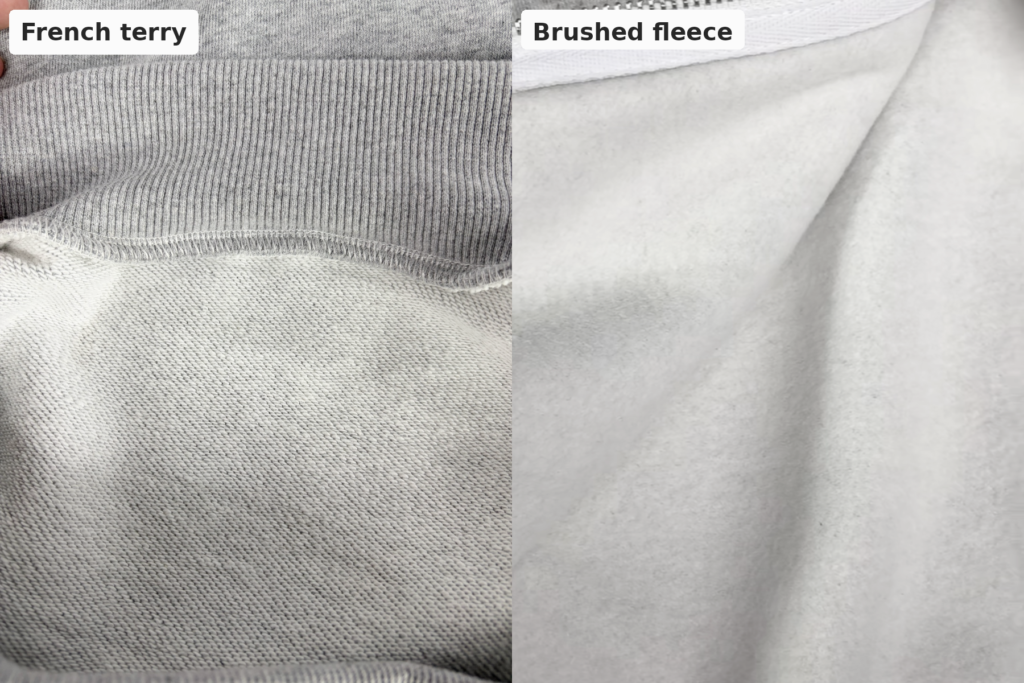
Turn each fabric over. French terry, also called loopback, has visible yarn loops on the inside. Brushed sweatshirt fleece has a raised, soft inner surface. Their outer faces may look similar, so a photograph of the front alone is a poor way to choose between them.
That inside surface changes the wearing experience. If your brief calls for a hoodie that can be worn across changing temperatures or layered under a jacket, French terry may be a useful direction to sample. If the soft, plush feeling of the inside is a main selling point, review brushed fleece.
Neither name tells you the full specification. Fibre content, fabric weight, knit construction, and finishing also affect how the hoodie feels. When comparing options, ask to see the actual fabric swatches, including both sides.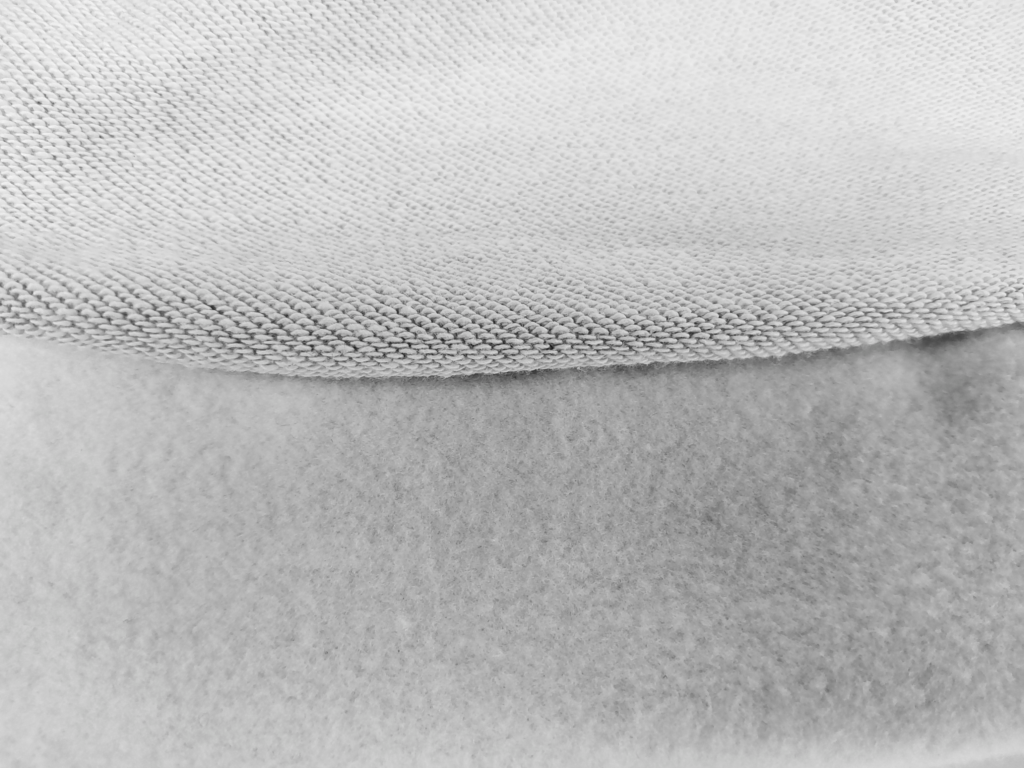
Picture the finished hoodie, not just the swatch
A small piece of fabric tells you what the surface feels like. It cannot show the full shape of an oversized hoodie.
Think about the design you are developing. Does the hood need to stand up visibly around the neck? Should the body fall in softer folds, or keep a broad, defined outline? Will the wearer put a coat over it? These questions help you judge the fabric as part of the garment.
Consider two hoodies drawn from the same sketch:
- Hoodie A is intended as an everyday streetwear piece that customers can layer. The brand wants a substantial feel but does not want a noticeably fluffy inside. A suitable French terry is worth sampling.
- Hoodie B is intended for a colder-season collection. The brand wants the brushed interior to be part of the product experience. A suitable brushed fleece is worth sampling.
These are starting directions, not rules. A heavyweight French terry can make a substantial hoodie, while fleece is available in different weights. The finished sample should decide whether the fabric supports the design.
Do not let GSM make the decision by itself
GSM tells you how much a square metre of fabric weighs. It does not tell you how warm, thick, soft, or structured a finished hoodie will be.
For example, specifying “400 GSM” still leaves important questions unanswered: Is the inside looped or brushed? What is the fibre composition? How does the fabric bend at the sleeve and hood? How does it feel after the intended finishing and care process?
Use GSM to compare fabric options alongside their other specifications. If two swatches have different weights and different compositions, you cannot attribute every difference in feel to the loopback or brushed surface. Ask for the details of each swatch before deciding what you prefer.
For a broader overview of the materials used in custom garments, see our Materials & Fabrics page.
Check the parts where extra fabric gathers
When a hoodie is made, some areas contain several layers of fabric. The hood opening, neck seam, pocket edges, cuffs, and hem are good places to examine during sampling.
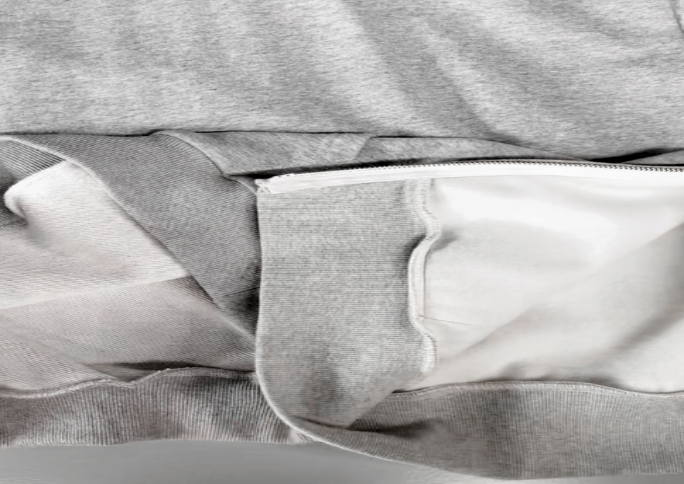
A fabric that feels appealing as a single swatch may create more bulk than you want in a double-layer hood. A heavier body fabric may also change how the ribbed hem sits. These effects depend on the particular fabric and the garment construction, so check them on a physical sample.
If your hoodie includes matching sweatpants, look at the garments together. Decide whether you want the set to have the same fabric and inside finish, and check how both pieces look after the planned wash or finishing process. A fabric choice that works for the hoodie should still suit the shape and comfort you want from the pants.
Keep print and embroidery decisions connected to the fabric
Both French terry and brushed sweatshirt fleece can have a suitable outer face for decoration. The fabric name alone does not guarantee how your specific artwork will look.
Share the artwork size, position, colours, and intended effect when discussing fabric options. For a large back print, review the result on the selected fabric face. For embroidery, check how the decorated area behaves when the fabric is handled and worn.
If your collection includes garment washing or dyeing, review the decorated sample after the intended process. The fabric, artwork, and finish should be approved as a combination rather than as separate ideas.
You can explore the fit and decoration options for your style on our Custom Hoodies & Sweatshirts page.
A simple way to compare samples
Before approving a fabric, write down what matters most to your brand. Then handle the swatches and review a garment sample against those points.
| Your product question | What to look at |
|---|---|
| What should the customer feel against the skin? | The actual inner surface of each swatch and finished sample |
| What shape should the hoodie keep? | The body, dropped shoulder, sleeve, and hood on the finished garment |
| How will it be worn? | Comfort with the intended layers and in the intended season |
| Do trims and decoration work with it? | Ribbing, seams, pocket edges, print, and embroidery on the chosen fabric |
| What happens after care or finishing? | The sample’s measurements, appearance, and feel after the agreed process |
If you compare two sample hoodies, record their fabric compositions, GSM, and construction details. Those notes help you explain why one result works better for your collection.
Which one should you choose?
Choose French terry as a starting point when you want a looped inner surface and a hoodie designed around layering or a less plush feel. Choose brushed fleece as a starting point when a soft, raised inside is central to the product you want to sell.
Then confirm the choice with the actual fabric and a sample made to your design. The right answer belongs to the hoodie your brand is developing, including its fit, hood, decoration, and intended use.
Yizhe Studio develops custom hoodies from brands’ designs and specifications. If you have a reference garment, fabric swatch, or design brief, you can contact us about your hoodie project and discuss suitable options before sampling.
Frequently asked questions
Is French terry always lighter than brushed fleece?
No. Both are available in different weights. Compare the actual GSM, composition, and finished garment rather than relying on the fabric name.
Is brushed fleece always the warmer choice?
A brushed inner surface can give a warmer, softer impression, but the warmth of a finished hoodie also depends on its weight, construction, fibre content, and how it is worn. Compare suitable samples for your intended product.
Can I choose a fabric from a photograph?
A photograph can show colour and appearance, but it cannot communicate the inside feel or how the fabric hangs on a finished hoodie. Request swatches before confirming an important fabric decision.