Sweater vs Sweatshirt: What Is the Difference for Clothing Brands?
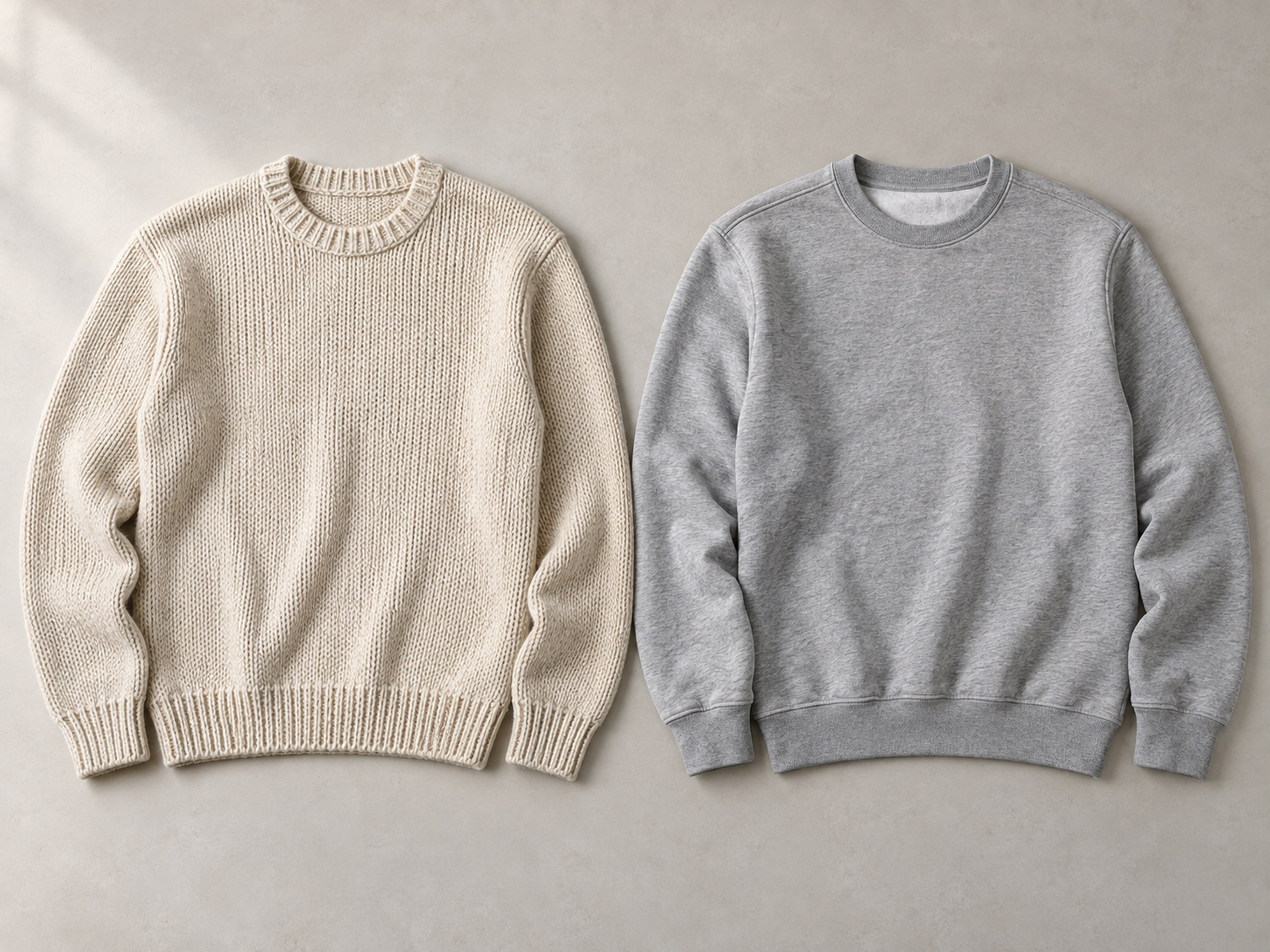
A crewneck sweater and a crewneck sweatshirt can have almost the same outline in a sketch. Both may have long sleeves, ribbed cuffs and a relaxed fit. Once you hold them, the difference becomes clearer: one may show the texture of knitted yarn, while the other has the smoother face of sweatshirt fabric.
For a clothing brand, that difference affects more than the product name. It changes the materials you specify, the details you can develop and the sample you need to approve.
What Is a Sweater?
A sweater is usually developed around yarn and knit structure. The yarn might be cotton, wool, a blend or another suitable material. The surface can be fine and smooth, visibly ribbed, textured, striped or patterned.
Sweaters can be made through different knitting and assembly methods. Some use knitted panels that are joined together; others are cut and sewn from knitted material. The exact method depends on the design and the production approach.
When briefing a sweater, it helps to describe the yarn feel and the appearance of the knit. Do you want a fine, compact surface or a more visible stitch texture? Should the body fall softly or hold a fuller shape? These choices give the product much of its character before a logo is added.
What Is a Sweatshirt?
A sweatshirt is generally made by cutting and sewing pieces from an existing fabric, commonly French terry or fleece. That fabric is itself knitted, so the difference between a sweater and sweatshirt is not simply “knitted versus non-knitted.”
A sweatshirt often has a relatively smooth outer surface. Depending on the fabric, its inside may show loops or a brushed finish. Brands can then develop the body fit, neckline, ribbed trims, stitching and decoration around that fabric.
If your collection relies on a large chest graphic, a bold back print or a particular washed appearance, a sweatshirt may give you a suitable starting point. The final choice still depends on the specific fabric and process you want to use.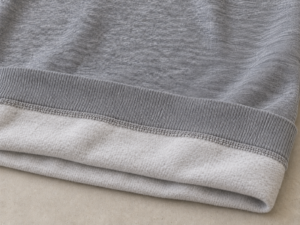
How Do They Look Different on the Garment?
Look closely at a real sample rather than judging only from a flat drawing.
On a sweater, the knit itself may be the main visual detail. A change in stitch, yarn color or texture can form part of the design across the body and sleeves. On a sweatshirt, the main fabric may provide a quieter surface while the silhouette, print, embroidery or wash carries more of the visual impact.
Neither product has to follow those descriptions. A plain fine-knit sweater can look very minimal, and a sweatshirt can have textured fabric. Use them as questions to guide your design: Do you want the material to create the pattern, or do you want to add the main design onto the finished garment?
Does One Have to Be Warmer?
No. “Sweater” and “sweatshirt” do not tell you enough to judge warmth on their own. Yarn composition, knit density, fabric weight, brushed interiors and garment fit all affect how the finished piece feels.
A light sweater may work as a layering piece. A substantial brushed-fleece sweatshirt may suit a cooler season. You can also develop heavier knitwear or a lighter French terry sweatshirt. Compare actual material and samples instead of choosing by the product name alone.
Which Is Better for Your Brand’s Design?
Start with the design feature your customer should notice first:
- Visible knit texture, knitted stripes or a yarn-led pattern: Explore a sweater.
- A prominent printed graphic on a smoother surface: Explore a sweatshirt.
- A relaxed crewneck with a particular washed finish: Discuss the sweatshirt fabric and finishing together.
- A soft layering piece with a fine-knit appearance: Review sweater yarn and knit options.
These are design directions, not rigid rules. If your reference sits between the two categories, share a photo or physical garment and describe the exact texture, shape and details you want.
What Should You Check on the Sample?
For a sweater, examine the knit surface, yarn feel, neckline, cuffs and how the garment hangs when worn. For a sweatshirt, review the chosen fabric, inside finish, fit, rib trims and any printing or embroidery.
For both products, check the finished measurements and how the garment looks after the intended care or finishing process. If you change the material after approving a fit, review the new sample before treating the result as final.
The best choice is the one that supports your design. Begin with the appearance and feel you want your customer to experience, then develop the material and construction around that goal.
Planning a custom crewneck for your clothing brand? Send Yizhe Studio your sketches or reference images so we can review the product direction and discuss the next step in sample development.