The label inside a hoodie or T-shirt is small, but your customer may see and touch it every time they put the garment on. It carries your brand name, sits against the neck, and needs to look right at its actual finished size.
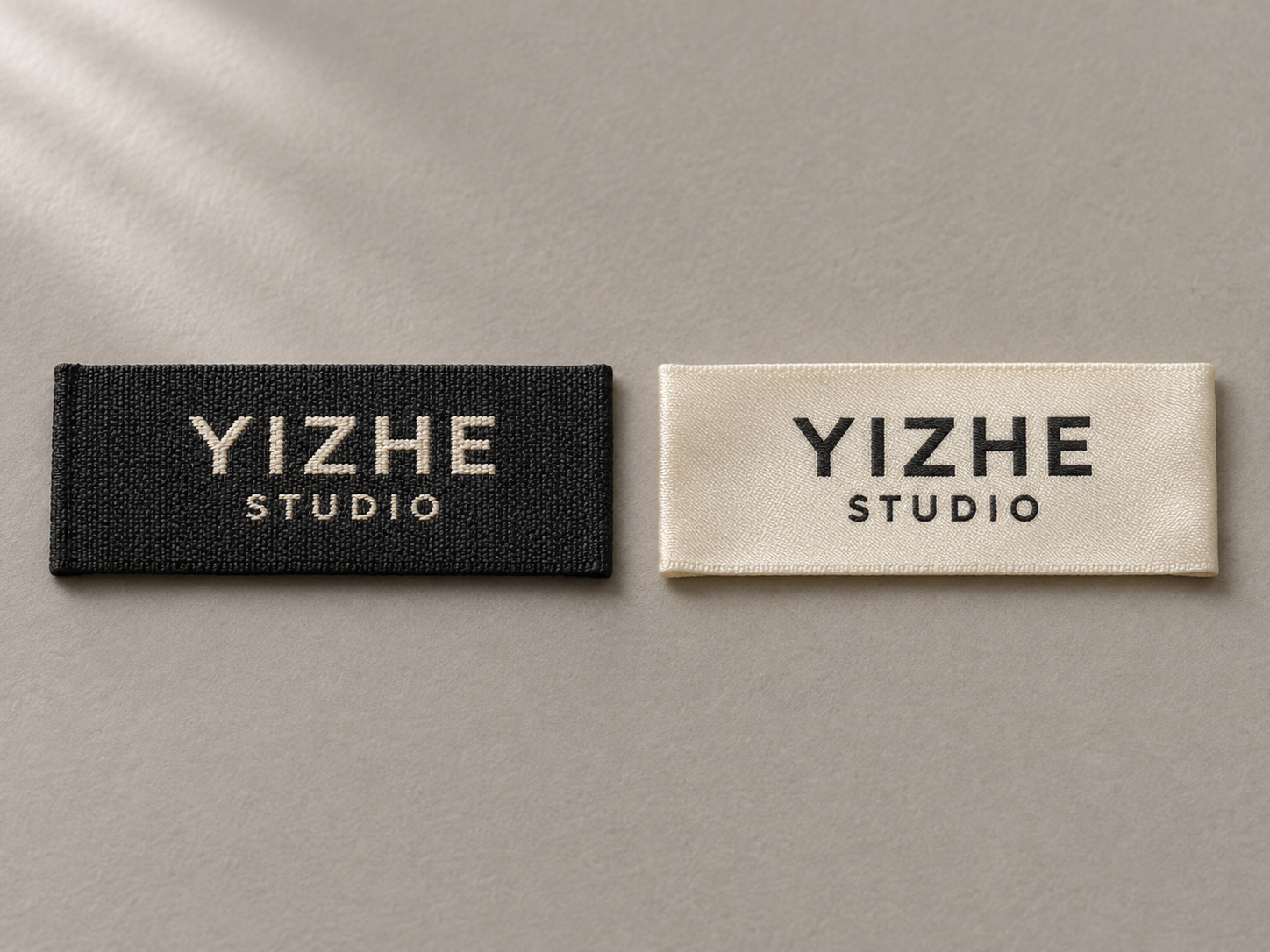
Two common options are a woven label and a printed fabric label. Neither is automatically the better choice. Before deciding, ask what the label needs to do: display a simple brand mark, show several lines of information, or feel almost unnoticed when worn.
In this article, printed neck label means a design printed on a separate fabric label that is sewn into the back neck. A print or heat transfer applied directly to the garment is a different construction and should be specified separately.
What Woven Labels Bring to a Garment
A woven label forms its design with threads. The lettering or logo becomes part of the label’s structure, giving it a visible textile texture. This can work well when the main job of the neck label is to display a clear brand name or simple mark.
However, the design must still read at a small size. Fine lines, tightly spaced letters and tiny details can become less clear when translated into woven threads. A logo that looks sharp on a screen may need a simplified version for the finished label. Label producers also commonly recommend printing for very small text and detailed information. 
When Woven Labels Make Sense
Consider a woven main label if your brand mark is relatively simple and you want the label’s texture to be part of the garment’s presentation. A two-colour wordmark on a hoodie, for example, may be easier to assess as a woven sample than a logo with a gradient and several lines of fine print.
Look beyond the front of the label. Its fold, cut edges, thickness and sewing position determine how it sits inside the neckline. A well-chosen design can still feel wrong if the finished label is too large or its edges press against the wearer’s neck.
What Printed Neck Labels Do Differently
A printed neck label puts the artwork onto a fabric base. Printing can be useful when the design includes fine lettering, several colours or information that would be difficult to show clearly in a small woven area.
The base fabric matters. A printed label can be soft or firm depending on the material and finish, just as a woven label can vary in feel. Do not choose solely from a digital artwork preview. Ask to see the printed result at the intended dimensions and on the material proposed for your garments.
Also distinguish a printed main label from a care and composition label. Your brand may choose one method for the visible back-neck identity label and another for the information label sewn elsewhere inside the garment.
Decide What Information Goes Where
Trying to place your logo, size, fabric composition and care instructions into one small back-neck label can make it crowded. Start by assigning each piece of information a job.
For a hoodie collection, one possible arrangement is:
1.A woven or printed main label at the inside back neck for the brand name.
2.A separate size label below or beside it.
3.A care and composition label at an appropriate interior position.
Another brand may prefer to combine the brand and size in one label. The right arrangement depends on how much information you need, the garment construction and the requirements of the markets where you sell. Your artwork should show both the label content and where each label will be sewn.
Check Comfort at the Neckline
A loose label sample held between your fingers does not tell you how it will feel inside a finished garment. Sew the proposed label into a hoodie or T-shirt sample, then put the garment on.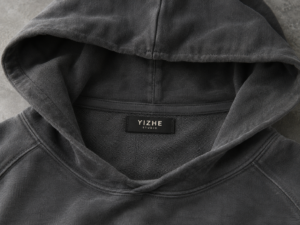
Check whether the label sits flat, whether its corners lift, and whether the seam or folded edge rubs the neck. This is especially useful for a heavy hoodie with a substantial neckline or for a T-shirt that sits closer to the skin.
If comfort is the main concern, discuss the label material, fold and attachment method before rejecting woven or printed labels as a whole. Both categories have different material and finishing options.
Compare the Labels on an Actual Sample
Ask the factory to show both options at approximately the finished size. Place them side by side under the same light, then assess them in this order:
- Readability: Can you recognise the brand name without enlarging the image?
- Colour: Does each result match the approved colour direction?
- Feel: Are the face, edges and reverse suitable for the chosen garment?
- Placement: Does the label sit correctly inside the finished neckline?
- After-care appearance: How does the label look after the agreed sample wash?
Make a decision using the label attached to the garment, not only a close-up of the label by itself. A beautifully made label can still be the wrong width or fold for a particular neckline.
What to Send the Factory
To request suitable label options, send your logo artwork, the exact text to appear, preferred finished dimensions, colour references and intended garment type. Mark the proposed position: inside back neck, side seam, hem or an exterior pocket detail.
If you have not chosen a material or fold, describe the result you want. For example:
“We need a small main label for a heavyweight hoodie. The two-colour wordmark should be easy to read, and the label should sit comfortably at the inside back neck. Please compare a woven option with a printed fabric option at the same finished size.”
At Yizhe Studio, custom clothing labels are reviewed alongside the garment’s fabric, neckline and sample construction. Send us your artwork and garment details so we can discuss a suitable label specification before bulk production.
So, Which Should You Choose?
Choose based on the label’s actual job. A woven option may suit a clear, simple brand mark when you want a textile finish. A printed fabric option may help when the artwork contains finer details or more information. In either case, confirm readability, comfort and placement on a finished sample before approving the label for your collection.